The team
The people who understood without explanation are scattered or gone. Ordinary friendships can feel thin by comparison.
RebuildRelationships that carry real weight again.
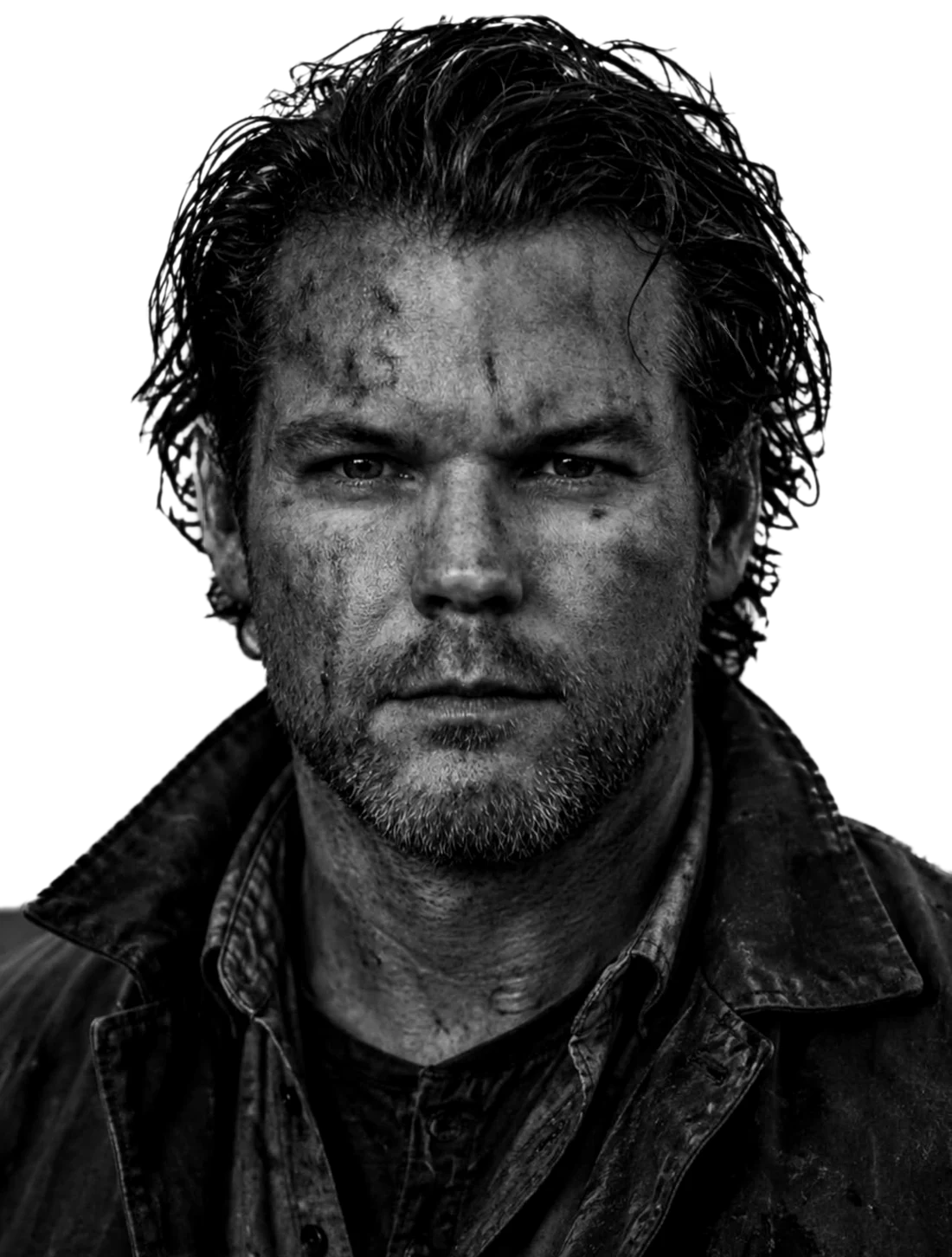
We teach people how to prepare for the mission. We teach them how to survive the mission. But who teaches them how to come home?
Training covers the deployment. Almost nothing covers the return.
This practice is for that overlooked transition: the months and years after the mission ends, when you’re expected to step back into an ordinary life as if nothing had changed.
I’m Burke Bryant. I spent more than twelve years in humanitarian rescue and disaster response, from the 2010 Haiti earthquake to the war in Ukraine, and I’ve made the journey home many times myself. Now I help other people make it.
“Surviving the mission and learning to live afterward are two very different things.”— Burke Bryant
Out there, every day had a purpose you didn’t have to question. You knew who had your back. Decisions mattered, and you were good at making them.
Then you come back. The stakes drop overnight. The people around you mean well, but they can’t quite follow what you’re describing. The skills that kept you and others alive don’t have an obvious place in a grocery store line or a quiet evening at home.
None of this means something is wrong with you. It means you’ve made a real transition, and almost no one prepares people for this half of it.

| Out there | Back home |
|---|---|
| A clear mission | Days without an obvious point |
| A team that understood without explanation | People who love you but don’t quite get it |
| Every decision carried weight | Decisions that feel small, or strangely heavy |
| Fully engaged, all the time | Restless when everything is calm |
| Knowing exactly who you were | Wondering who you are without the role |
People coming home from high-intensity work describe the same losses again and again, often without having the words for them.
Naming what’s missing is the first step. Rebuilding it is the work.
The people who understood without explanation are scattered or gone. Ordinary friendships can feel thin by comparison.
RebuildRelationships that carry real weight again.
Every day had a reason that needed no defending. Now the reason has to come from somewhere else, and it isn’t obvious where.
RebuildA sense of purpose beyond the mission.
Nothing at home matches the focus and the stakes. Calm can feel like boredom, or like something is about to go wrong.
RebuildSatisfaction that doesn’t depend on crisis.
For years, the work answered the question of who you are. Without it, the answer gets harder to give.
RebuildA sense of self beyond the role.
Family, friends and community kept living while you were away. Coming back can feel like arriving somewhere you used to belong.
RebuildYour place with the people who matter.
The mission came with a plan, a schedule and a destination. Afterward, the future can look wide open and strangely empty.
RebuildA next chapter worth moving toward.
From the 2010 earthquake in Haiti to the war in Ukraine, I spent more than twelve years in humanitarian rescue and disaster response.
In 2016 I founded HARP Rescue, which went on to lead search and rescue, high-risk extractions and crisis response in disaster and conflict zones around the world.
Out there, my life made sense. I knew what to do, who I was, and why it mattered.
I’ve made the transition back to civilian life many times. It never got as easy as it looked from the outside.
The focus and urgency that served me in the field had nowhere to go at home. The people who understood what I’d seen were often on the other side of the world. And the question of who I was without the work kept coming back.
Years spent responding to other people’s emergencies meant missing moments in my own life that could never be recovered. Relationships suffered. Time disappeared. I was so committed to the mission that I rarely stopped to ask what it was costing me.
I wrote about that as honestly as I could in my memoir, Still Alive But At What Cost.
I don’t have a clinical answer, and I won’t pretend to. What I have is lived experience of coming home, and years of honest reflection on what helped and what didn’t.
That’s what I bring to this work: not a hero’s story, but an understanding of how hard the return can be, and a commitment to helping others make it with more support than most of us get.
I’ve spent years seeing what people do to survive. Now I help them learn to live afterward.


“That rule no longer applies.”
Still Alive But At What Cost
An honest account of the personal consequences of a life spent in humanitarian rescue: what the work gave, and what it took.
Read the memoir ↗“The honesty is relentless. There’s no filter, no performance, no attempt to soften what’s real.”
“There is a rhythm to his storytelling—urgent, reflective, almost confessional.”
“The book encourages readers to seek not just survival but a richer, more meaningful life.”

The goal isn’t to forget the mission. It’s to build a life beyond it.
A working structure for rebuilding life after high-intensity service. It grew out of lived experience and it’s still developing. What it offers is a map: six dimensions of life that tend to shift when the mission ends, and that can be rebuilt with intention.
Rebuilding meaningful relationships and a sense of brotherhood.
Rediscovering purpose beyond the mission.
Learning to feel satisfied without constant intensity.
Understanding who you are beyond your role and your service.
Rebuilding relationships with family and community.
Creating a meaningful next chapter.
We talk about where you’ve been, where you are now, and whether this is the right fit. No pressure and no commitment.
Together we look across all six dimensions: what’s holding steady, what’s missing, and what matters most right now.
Each conversation turns toward practical steps in the areas you choose, at a pace that fits your life.
Over time, the focus shifts from what was lost to what you’re building next.
The framework is a coaching tool, not a clinical model. It hasn’t been scientifically validated, and it isn’t a treatment for any condition. It’s a practical way to organize honest conversations about life after the mission.
Aid workers, search and rescue teams, disaster responders and others coming back from field deployments, whether for a few weeks or for good.
People leaving the military or returning from deployment, and those who left years ago and are still finding their footing.
First responders carrying years of high-stakes calls into retirement, a career change, or the life that waits between shifts.
Medical teams, journalists, security professionals and anyone else whose work kept them in high-intensity environments for a long time.
My own experience comes from humanitarian rescue and disaster response. It isn’t the same as military service, firefighting or police work, and I won’t pretend to know those worlds from the inside. What carries across is the return itself: losing the team, the purpose and the intensity, and the work of building a life afterward.
NGOs, emergency services, veteran organizations and other institutions are responsible for people moving through hard transitions: coming back from deployment, rotating out of the field, retiring, or changing roles.
If your organization wants to support people through that change, not just up to it, I’d welcome a conversation about what would help.
Talk about your organization →Here’s what’s available now and what’s still being built. I’d rather be clear about that than promise something I can’t yet deliver.
Formats and fees aren’t listed here. We’ll talk about what fits your situation in the first conversation.
Private conversations built around the six dimensions of the framework and the life you’re actually coming home to.
Request a first conversation →For conferences, organizations and teams: the realities of humanitarian work, the cost of purpose, and what it takes to build a life after the mission.
Invite me to speak →Workshops and longer engagements for NGOs, emergency services and veteran organizations. They’re being developed now, and I’m open to early conversations about what would help your people.
Start that conversation →A structured reintegration program built on the Mission-to-Life framework. It isn’t available yet. Sign up for the notes below to hear when it opens.
Get notified →Occasional writing on reintegration and life after the mission, plus word when new programs and workshops open.
No noise. Unsubscribe anytime.

If something here sounds familiar, the next step is a private conversation. Tell me a little about where you’ve been and where you are now. I’ll read it myself and reply by email to find a time to talk.
Honest talks on humanitarian work, the cost of purpose, and what it takes to come home. And conversations with organizations that want to support their people through the return.
We prepare people for the mission and teach them to survive it. Why the return is so often the hardest part, and what helps.
What happens when the thing that gives your life purpose also begins to consume it?
How people decide and lead when everything familiar is stripped away, and what they carry home afterward.
Connection, meaning, identity and direction: rebuilding a full life after years of high-intensity service.
For organizations. Workshops and longer engagements for NGOs, emergency services and veteran organizations are in development. If your organization supports people through deployments, rotations or retirement, I’d welcome an early conversation about what would help.
Talks and workshops are educational. They are not clinical training, therapy or a substitute for professional mental health support.
One-on-one reintegration coaching for people coming home from humanitarian work, military service, emergency services and other high-stress environments.
We begin with an honest look at what’s changed since the mission ended, without judgment and without a script.
The Mission-to-Life framework gives us a map: connection, meaning, fulfillment, identity, reconnection and direction.
Conversations stay grounded in your actual life: the relationships, decisions and days you’re navigating now.
I bring lived experience of the return, not clinical credentials. I’ll tell you plainly when something is outside what coaching can offer.
Begin with a conversation. Send a short note about where you’ve been and where you are now. I’ll reply by email to arrange a first conversation and see whether this is the right fit.
Coaching is not therapy, counseling or medical treatment, and it doesn’t diagnose or treat PTSD, depression, trauma or any other condition. If you’re struggling, please also reach out to a licensed professional. If you’re in crisis, in the US call or text 988 (veterans, press 1); elsewhere, findahelpline.com lists free support in your country.